NAVY EXTENDING AIRSPACE FOF GROWLER TRAINING FLIGHTS OVER METHOW VALLEY
February 19, 2024
For details on the Navy’s proposal, please go to https://mvcitizens.org/comment-on-navy-proposal-to-expand-training-area-in-the-methow/
The impact on wildlife and tourism, not to mention disruption for residents, is huge. Yet the Navy says it will have “no significant impact.” Once again, they are faking an Environmental Impact study. Your voice is needed.
____________________________________________________________________________________________________
April 1, 2022: Parks are for the People! A Victory years in coming! We did it! We took back the WA State Parks for the people’s use as places of recreation and peace. We can be proud of the work done to bring this about:
Thurston County Superior Judge Dixon had reviewed over 1,000 pages of the record and issued a ruling immediately following oral arguments today. In the case of Whidbey Environment Action Network (WEAN) vs Washington State Parks Commission, the court ruled:
1. The Commission overstepped its legal authority in approving military training in state parks and vacated the commission’s January 28, 2021 decision approving the training. In the ruling the judge pointed out that the commission was charged with overseeing the state parks for the purposes for which they were set aside by the legislature: Recreation, Preservation and Education of the parklands. Nowhere in the statute is military training mentioned and it clearly does not fall into the purpose for which the parks were created. Nor do the definitions of Recreation, Preservation and Education include military training – either explicitly or implied.
2. State parks also violated the State Environmental Policy Act (SEPA) by not completing comprehensive reviews including impact on the public – either physical or emotional. The Mitigated Determination of Non-Significance approved by the commission was likewise vacated meaning the SEPA review did not comply with state law.
This is stunning victory as the court validated every point in the complaint resulting in an effective prohibition of military training in state parks. This is the first ruling on military use of public parks in the state and will become an important precedent in state case law. Gratitude goes to WEAN for the lawsuit and NIOP for their tireless support and work.
Help pay the attorney’s fees – the people won, but we owe the brilliant lawyer who made it possible: DONATE
SEE THE VIDEO OF THE COURT PROESSDINGS AT https://youtu.be/bQB-ZFQKp3c
EARLIER NEWS OF NOTE:
UNITED STATES DISTRICT COURT WESTERN DISTRICT OF WASHINGTON AT TACOMA STATE OF WASHINGTON, et al., Plaintiffs, v. UNITED STATES DEPARTMENT OF THE NAVY, et al., Defendants. CASE NO. 2:19-cv-01059-RAJ-JRC REPORT AND RECOMMENDATION NOTED FOR: December 31, 2021 The District Court has referred this consolidated case to the undersigned. Dkt. 19. The matter is before the Court on cross-summary judgment motions filed by plaintiffs Citizens of the Ebey’s Reserve for a Healthy, Safe, and Peaceful Environment and Paula Spina (collectively “COER”); the State of Washington; and defendants the U.S. Department of the Navy, Mark Esper, Richard Spencer, Todd Mellon, Mathew Arny, and the U.S. Fish and Wildlife Service (collectively “the Navy”). Dkts. 87, 88, 92. Plaintiffs challenge the Navy’s 2018 final environmental impact statement (“FEIS”) and 2019 record of decision authorizing the expansion of EA-18G “Growler” aircraft operations at the Naval Air Station Whidbey Island (“NASWI”) under the National Environmental Policy Act Case 2:19-cv-01059-RAJ-JRC Document 109 Filed 12/10/21 Page 1 of 38 REPORT AND RECOMMENDATION – 2 1 2 3 4 5 6 7 8 9 10 11 12 13 14 15 16 17 18 19 20 21 22 23 24 (“NEPA”), 42 U.S.C. §§ 4321 et seq., the National Historic Preservation Act (“NHPA”), 16 U.S.C. §§ 470 et seq., and the Administrative Procedure Act (“APA”), 5 U.S.C. §§ 551, et seq. These statutes mandate a procedure that an agency must follow before taking an action as significant as the Growler expansion at NASWI. Under NEPA and the APA, the Navy’s decision may be overturned if the Navy acted “arbitrarily and capriciously” and failed to take a “hard look” at the consequences of the proposed action. Here, despite a gargantuan administrative record, covering nearly 200,000 pages of studies, reports, comments, and the like, the Navy selected methods of evaluating the data that supported its goal of increasing Growler operations. The Navy did this at the expense of the public and the environment, turning a blind eye to data that would not support this intended result. Or, to borrow the words of noted sports analyst Vin Scully, the Navy appears to have used certain statistics “much like a drunk uses a lamppost: for support, not illumination.” When reporting on the environmental impact of Growler fuel emissions, the Navy underreported the true amount of Growler fuel emissions and failed to disclose that it was not including any emissions for flights above 3,000 feet. Even after receiving a comment on the issue, the Navy failed to disclose its underreporting and dismissed the issue with broad generalities. With respect to the impact of this increased operation on childhood learning, the Navy acknowledged numerous studies that concluded that aircraft noise would measurably impact learning but then arbitrarily concluded that because it could not quantify exactly how the increased operations would interfere with childhood learning, no further analysis was necessary. Case 2:19-cv-01059-RAJ-JRC Document 109 Filed 12/10/21
REPORT AND RECOMMENDATION – 3 As to the impact of increased jet noise on various bird species, the Navy repeatedly stated that increased noise would have species-specific impacts on the many bird species in the affected area but then failed to conduct a species-specific analysis to determine if some species would be more affected than others. Instead, the Navy simply concluded that certain species were not adversely affected and then extrapolated that all the other species would not be affected, either. Regarding evaluating reasonable alternatives to the Growler expansion at NASWI, which the Navy was required to do, the Navy rejected moving the Growler operations to El Centro, California out of hand, summarily concluding that such a move would cost too much and that moving the operation to that location would have its own environmental challenges. The Navy’s cursory rationale was arbitrary and capricious and does not provide a valid basis to reject the El Centro alternative. For these reasons, the Court recommends that the District Court find the FEIS violated the NEPA and grant all summary judgment motions in part and deny them in part. Dkts. 87, 88, 92. Also, the Court grants plaintiffs leave to submit extra record evidence to address certain issues. Dkt. 85. Assuming the District Court follows this recommendation, it should order supplemental briefing regarding the appropriate remedy for the NEPA violations described herein.
This excellent article on the history of Growler presence in the Olympic Peninsula/Salish Sea area was just published, and it is definitely worth a read: https://rainshadownorthwest.com/2021/11/01/the-loudest-jets-in-the-quietest-park/
In March, Governor Inslee appointed Mr. Peter Mayer to be the new Washington State Parks and Recreation Agency Director. Part of the Director’s job is to approve or disapprove the Navy’s proposed use of our state parks for covert military training. Since Mr. Mayer is new to state parks and the concept of permitting the U.S. military to use a broad range of Washington’s State Parks for warfare training, it would be instructive for him to hear from members of the public (that’s you) informing him of their opinions about this incongruous use of our parks. He can be reached through his Executive Assistant, Becki Ellison: becki.ellison@parks.wa.gov.
Update on Issuance of Park Permits for Military Training Purposes:
On January 28th, 2021, the State Parks Commission voted 4:3 in favor of allowing agency staff to review the 28 individual military permit applications for use of up to 28 state parks. As far as we know, staff continue to work on these reviews. We have not heard of any parks being eliminated from consideration or of any approved permits.
The Director has the authority to direct staff to stop their reviews. Please consider posting a courteous request to Director Peter Mayer telling him that his staff’s time is far better spent on priorities and projects that meet State Parks mission and goals and to direct his staff to stop their time and resource consuming reviews of the U.S. Military’s warfare training proposals.
The US Navy conducted covert warfare training in Washington State Parks around the Puget Sound for at least two decades without permits or public knowledge. Stories of encounters are emerging as people come forward with accounts of unidentified soldiers in the water and on beaches. Claims by the U.S. Navy of “no reported incidents” may be true, but that does not mean there have been no incidents of accidental discovery by civilians. Indeed, there have been. Anecdotes dating back to at least 2002 document mysterious soldiers emerging from Salish Sea waters onto beaches and alarming civilians.
In response to public and park ranger concerns, the Washington State Parks and Recreation Commission (Commission) issued a 2015-2020 Right-of-Entry permit allowing the US Navy to use 5 Puget Sound State Parks for limited training and waived environmental impact assessments and liability. No public hearing was held. The Navy occupied 7 State Parks and failed to fully comply with permit requirements. That permit expired in 2020.
Most recently, the Commission voted 4-to-3 to issue a new and expanded permit in January. As a result, covert military training and troops will more than triple and the number of State Parks used will increase from 5 to as many as 28.
According to the US Navy’s Environmental Assessment, branches of service in parks will expand to include:
“Occasional inclusion of other U.S. Special Operations Command components
- US Army Special Operations Command
- Marine Corps Special Operations Command
- Air Force Special Operations Command
- Joint Special Operations Command” (This may include troops from allies)
Where does this military expansion stop? Encounters WILL become more common as the training tempo increases.
Military members, veterans, and civilians are speaking out to keep Washington State Parks for people and nature – not for warfare training.
Help fund the large-scale legal appeal of the recent permit – DONATE
If you haven’t done so yet, sign the petition and sign up to volunteer!
Navy SEAL training in WA State parks
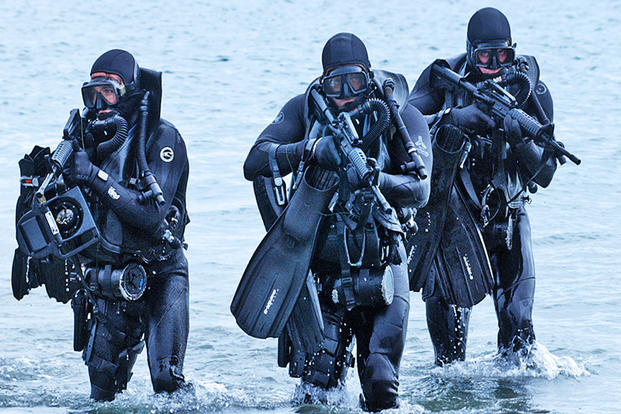
During a special meeting, the WA State Parks Commission voted to let the state parks director decide if daylight restrictions can be lifted or modified after the Navy’s nine-month trial period is up, as long as the Navy complies with limits on when and where it will conduct training operations.
That means that nine months from now, the Navy’s original request can go into effect without further input from the public and in disregard for input already received.
__________________________________________________
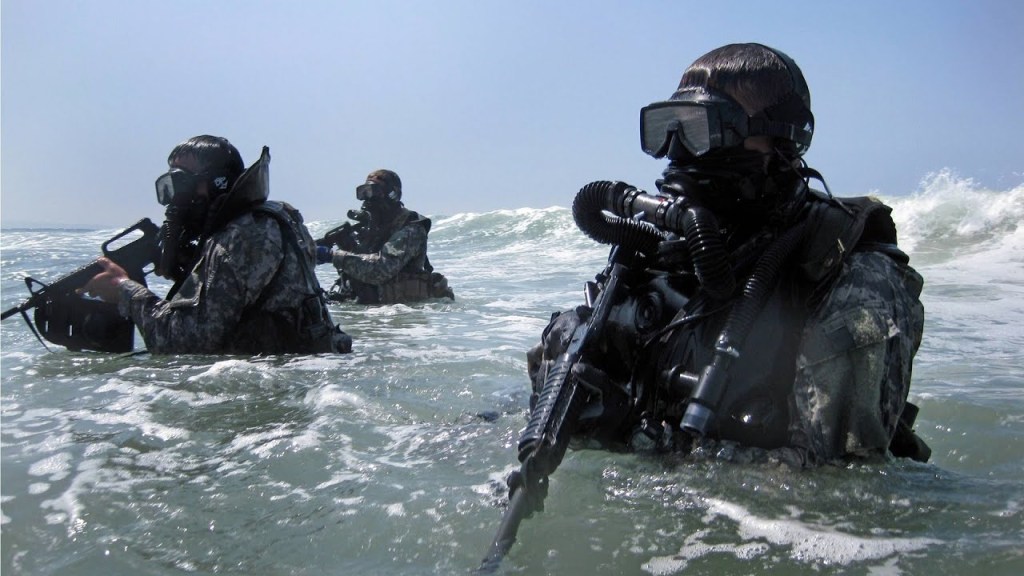
SEPA NOTICE OF ACTION -Naval Special Operations Training in Washington State Parks
Notice is given under SEPA, RCW 43.21C.080, that Washington State Parks and Recreation Commission on January 28, 2021 issued a Mitigated Threshold Determination of Non-Significance for The United States (U.S.) Naval Special Warfare Command (NSWC) request for authorization to conduct training activities in twenty-eight state parks.
Any action to set aside, enjoin, review, or otherwise challenge such action on the grounds of noncompliance with the provisions of chapter 43.21C RCW (State Environmental Policy Act) shall be commenced on or before March 11, 2021.
The Notice of Action and other information is available to be viewed at: http://bit.ly/ParksSEPA
Due to public health considerations for COVID-19, hard copies can only be viewed by appointment at: 1111 Israel Road SW, Olympia, WA 98504. To schedule a viewing, call: (360) 902-8844, or email infocent@parks.wa.gov.
Kylie Mohr, E&E News reporter
Published: Wednesday, February 3, 2021
A mother and calf orca swim in Puget Sound near Tacoma, Wash. Some experts worry proposed Navy training exercises would put orcas at risk. Mike Charest/Flickr
Environmentalists are worried that additional Navy training in Washington state parks will hurt on- and offshore plants and animals, including the struggling orca population.
The state Parks and Recreation Commission approved a plan to use up to 17 parks for nighttime stealth training of SEAL teams with a 4-3 vote Thursday. Locations include the islands and coasts in Puget Sound and the waters along the state’s southern coast.
Marianne Edain, a restoration ecologist who helps run the Whidbey Environmental Action Network (WEAN), said her response to the vote was “somewhere between outrage and bitter disappointment.”
“It’s just plain wrong on so many levels,” she said.
Only five coastal state parks were used previously, and the expansion was controversial.
“State parks are for people and nature, not war games,” Steve Erickson of WEAN told The Seattle Times.
Many opponents were worried that members of the public would be subject to surveillance as part of the training or that daytime missions would alienate park users. While those issues were addressed in changes to the plan last week, nagging environmental concerns remain, despite an official finding in late December that the rules applied to the Navy would “ensure no impacts to the environment would occur.”
A spokeswoman for the Washington State Parks and Recreation Commission, Toni Droscher, said the panel consulted with a marine mammal specialist at the Washington Department of Fish and Wildlife. “The mitigation is enough to ensure there will be no impacts,” she said.

[+] A map from the Navy’s 2019 environmental assessment shows its training study area in western Washington state. Navy
The Navy also scaled back its original proposal of using 28 parks, and the parks commission made some changes to permit criteria that provided “more robust protection measures for plant species and marine and terrestrial animals,” the Navy said in a press release. The commission added measures in the final document to protect orcas and bluff habitat.
But conservation experts and advocates aren’t pleased with the end result.
They disagree with the Navy’s environmental assessment (EA) — Edain called it “hundreds and hundreds of pages of hogwash” — and said vague language on what constitutes “avoiding” natural resources in operations is a red flag.
“It became obvious in reading the EA that this was somebody who sat in an office in Virginia or D.C., and if they were ever out here, they didn’t see anything,” Edain said. “There were embarrassing mistakes in that EA.”
The Navy’s 2019 environmental assessment states that NOAA Fisheries determined the project is unlikely to adversely affect endangered species, including whales, turtles and a variety of fish, or their critical habitats. It also states that effects to southern resident orcas are “insignificant and discountable,” despite orcas observed in proposed training areas.
Regional experts disagree and say that even if orcas avoid the area and aren’t struck by vessels, activities could further their struggle to find food.
“Washington state must consider the highly endangered status of the southern resident orcas when reviewing the Navy’s application to conduct trainings in new locations in the Salish Sea and off the coast,” reads a letter representing eight organizations, including the Seattle Aquarium and the Center for Biological Diversity. “In a time when we should be acting to address and decrease threats facing the orca population, the Navy’s proposed activities could increase the risks from ocean noise and disturbance.”
A list of which parks are included in the approved plan isn’t yet available. Droscher said staff needed to work through each permit and apply the approved conditions. The EA’s preferred alternative shows the heaviest use being in a zone between Triton Cove on the Hood Canal up to Fort Flagler on Marrowstone Island, east of Port Townsend.
Of the 23 additional parks the Navy asked to use in its original 2018 application, 15 were within endangered orcas’ currently designated critical habitat. If that habitat expands to what NOAA Fisheries proposed in 2019, all the currently proposed additional state parks would overlap.
The marine experts advocated that the Navy resubmit its application after including improved mitigation measures like lowering vessel noise and disturbance to reduce potential harms from unmanned underwater vehicles, remotely operated vehicles, and watercraft like Jet Skis and small boats on southern resident orcas. They’d also like to see the Navy avoid training times that correspond with migration and foraging times and use an existing whale and dolphin report system to determine whether animals are in the area.
Permit conditions and limitations, amended in January, didn’t include these proposed changes.
“We just feel like there are so many stressors on orcas that you need to reduce wherever you possibly can, and this is a really actionable thing to do,” said Nora Nickum, ocean policy manager at the Seattle Aquarium. “The situation is so dire.”
And changing to nighttime-only operations will make it nearly impossible to use watchers on boats, which the Navy said it would do. But spokeswoman Droscher said, “There will be no change on how the alert process works, regardless of day or night.”
WEAN and the aquarium share concerns that eelgrass beds, which host juvenile salmon that orcas feed on, could be damaged and lead to cascading effects. They say the EA’s language surrounding “best management practices” — such as keeping trainees off steep slopes and out of preserved natural areas to protect plants and prohibiting trainees from disturbing eelgrass — lacks teeth.
As a terrestrial ecologist, Edain is mostly focused on what she thinks the adverse environmental impacts of the training will be on land. She’s worried about trainees walking and crawling through dense shrubs and causing them “serious damage.”
She’s also worried that Navy trainees climbing coastal bluffs will exacerbate their inherent instability and harm coastal bluff prairies.
“Trees have significant roots to help hold steep ground,” Edain said. “Prairie plants do not. They are easily trampled and, contrary to the Navy’s EA, they do not bounce back.”
She’s now looking for a sponsor to introduce legislation stating there will be no military training in state parks, except for emergency response and search and rescue.
Twitter: @thatsMohrlikeitEmail: kmohr@eenews.net
********************************************************************
This is how shocking the situation is to many people:
These are the State Parks in which the Navy wants to conduct Special Ops training: Blake Island, Cama Beach, Camano Island, Cape Disappointment, Deception Pass, Dosewallips, Fort Casey, Fort Columbia, Fort Ebey, Fort Flagler, Fort Townsend, Fort Worden, Grayland Beach, Hope Island, Illahee, Joseph Whidbey, Leadbetter Point, Manchester, Mystery Bay, Pacific Pines, Scenic Beach, Sequim Bay, Shine Tidelands, Skagit Island Marine, South Whidbey, Triton Cove, Twin Harbors, and Westport Light.
On Thursday, January 28,2021 the Washington State Parks and Recreation Commission voted to allow the Naval Special Warfare Command (NSWC) to conduct Special Operations Training at multiple State Park locations throughout western Washington.
e-mail: steve.brand@parks.wa.gov with your opinion.
WA State Parks staff issued a “Mitigated Determination of Nonsignificance” (in compliance with the State Environmental Policy Act), which means the Parks believes the Navy’s covert training activities in the parks will not significantly harm the parks’ environment, sea life, plants, animals or visitors, and that the quality of visitors’ experience will not be affected. That may be true IF the trainees and their superiors stick to the Parks’ guidelines and if all the trainings go as planned. But these are trainees, meaning they are not yet perfectly skilled, and mistakes can happen.
Furthermore, the Navy has never adhered to the Department of Defense mandate to inform local law enforcement and parks personnel before each training. (That is why in North Carolina a Navy SEAL was shot and killed by a law enforcement officer who was not aware that a training was taking place.) Therefore, we cannot trust the Navy to adhere to the newly created guidelines from the Parks Commission.
The guidelines require trainees to be present only during dark nighttime hours, to avoid sensitive vegetation, and to stay away from campgrounds and the public. Will they?
PLEASE :
- Ask your Washington State legislator to co-sponsor a change in state law to expressly prohibit military training in our State Parks so we can enjoy our parks without fear of military interference. https://app.leg.wa.gov/DistrictFinder/ (Enter your address, then click through to their names and to send an email.
Other News:
It’s worse than we thought. As reported in an article from the Seattle Times, a new study shows the noise from the Growler jets is disrupting orcas and other whales and sea life as far as 100 feet underwater. Whales depend on their hearing to find food; when they can’t communicate with each other or hear natural sounds, they starve. See this article: https://www.seattletimes.com/seattle-news/environment/navy-growler-jet-noise-loud-enough-to-reach-orca-pods-even-100-feet-underwater-new-research-shows/?utm_source=referral&utm_medium=mobile-app&utm_campaign=ios
The Orca hydrophone study is an open access article that everyone has access to. The Olympic National Park article is a PDF on her site directly:
https://laurenkuehne.wordpress.com/cv/
KOMO News spot from 12-22-20:
https://komonews.com/search?find=Growlers
For more info, see “Key Issues” here: https://manage-the-damage.com/navy-seals-training-in-wa-state-parks
 MANAGE THE DAMAGE